


What is Web Application Penetration Testing?
Web application penetration testing is a manual, expert-led security assessment of websites, web applications, APIs and mobile apps – carried out by certified ethical hackers to identify and exploit vulnerabilities before real attackers can.
Unlike automated vulnerability scanning, which checks for known weaknesses against a database of existing CVEs, web application penetration testing involves active, manual exploitation by developer-trained consultants who understand how applications are built and how they can be attacked. This includes testing for logic flaws, authentication weaknesses, injection vulnerabilities, insecure API design and session management issues that automated tools routinely miss.
CyberLab’s web application penetration testing is aligned with the OWASP Top 10 for web applications, the OWASP API Top 10 for APIs, and the OWASP MASVS for mobile applications – the globally recognised standards for application security testing that cover the vulnerabilities most frequently exploited by real attackers.
Why Choose CyberLab for Web Application Penetration Testing?
CyberLab is trusted by over 1,200 organisations across the UK to secure their operations, systems and data.






Web Application Penetration Testing: The CyberLab Approach
Our web application penetration testing process follows a structured methodology aligned with OWASP and CREST guidelines. Every engagement begins with careful scoping and ends with a clear, evidence-based report and a re-test – so you have the assurance and the documentation you need.
What Does a Web Application Penetration Test Cover?
CyberLab’s web application penetration testing covers the full range of modern application types and components:
- Web Applications: Public-facing websites, authenticated web applications, customer portals, SaaS platforms and internal web-based tools – assessed against the OWASP Top 10 for vulnerabilities including SQL injection, cross-site scripting, broken authentication and security misconfigurations.
- APIs: REST, SOAP and GraphQL APIs assessed against the OWASP API Top 10 – covering broken object level authorisation, broken authentication, excessive data exposure, rate limiting weaknesses and server-side request forgery.
- Mobile Applications: iOS and Android applications assessed against the OWASP MASVS – covering data storage security, authentication, network communication, platform interaction and code quality issues.
- Authentication and Session Management: Multi-factor authentication implementations, OAuth and SAML flows, session token handling, password reset mechanisms and privilege escalation paths.
- Business Logic: Application-specific workflows, multi-step transactions, role-based access controls and process manipulation – the vulnerabilities that are unique to your application and invisible to automated scanners.
- Third-Party Integrations: Payment gateways, identity providers, third-party APIs and embedded scripts – assessed for the security risks they introduce into your application.
Our Accreditations
As a CREST-accredited web application penetration testing provider, trusted by 1,200+ organisations including financial services firms, e-commerce businesses and NHS Trusts, we test websites, APIs and mobile applications against the OWASP Top 10, OWASP API Top 10 and OWASP MASVS – delivered by developer-trained UK consultants with a re-test included as standard.



Success Stories: Web Application Penetration Testing
Penetration Testing

Moat Homes
Moat strengthens housing sector cyber resilience with CyberLab, securing 24/7 protection and Penetration Testing for trusted resident data.
“We know that our customers, colleagues and partners trust us with their personal data, and we take that responsibility very seriously. CyberLab’s deep technical knowledge and proactive support have been instrumental in helping us navigate complex threats with confidence. Their team of experts have become a trusted extension of our IT function.”
Penetration Testing

Sealey Group
From e-commerce security to 24/7 threat monitoring, Sealey Group trusts CyberLab to protect their business and customer data from evolving cyber threats.
“Working with CyberLab has greatly enhanced our cyber security posture. Their proactive approach and tailored solutions have strengthened our defences, ensuring our customer data and operations remain secure. The 24/7 support and expert guidance from their team have been invaluable, allowing us to focus on serving our customers with confidence and peace of mind.”
Web Application Penetration Testing for Regulatory Compliance
Web application security is a requirement or strong recommendation across the compliance frameworks most relevant to organisations handling customer data, processing payments or operating in regulated sectors.
Tales from the CyberLab Podcast
Episode 8 | Cyber Security for Websites & Apps Explained
Web applications are a prime target for cyber criminals, making security non-negotiable. From data breaches to stolen credentials traded on the dark web, the risks are significant – and costly. Just one compromise can have severe consequences, as seen when British Airways faced a £20M penalty after a major web breach.
In the latest episode of Tales from the CyberLab, David Dixon, Security Testing Pre-Sales Consultant at CyberLab, explains why web apps are so vulnerable, the dark web’s lucrative market for stolen data, and how penetration testing can protect your apps and APIs. Plus, discover the number one vulnerability affecting web applications today – and what you can do to stay secure.

What is your HackRisk score?
We scan your external attack surface and deliver a board-ready report with your risks and remediation advice, free of charge, within 24 hours.
Dark Web Scanning
Vulnerability Scanning
Recon Scanning
Supply Chain Security
Web Application Penetration Testing FAQs
Web application penetration testing is a manual, CREST-accredited security assessment that identifies and exploits vulnerabilities in websites, web apps, APIs, and mobile applications. Unlike automated scanning, it uses expert-led techniques to uncover logic flaws, authentication weaknesses, injection vulnerabilities, and other issues that automated tools routinely miss.
Web applications are one of the most frequently targeted attack surfaces – they are internet-facing, handle sensitive user data, and often contain custom code that automated tools cannot fully assess. A web app pen test provides independent, evidence-based assurance that your applications are secure, helps you meet compliance requirements, and protects your users and your reputation.
At a minimum, web application penetration testing should be performed annually and after any significant change to your application – such as new features, authentication changes, API additions, or infrastructure migrations. Organisations in regulated industries such as financial services, healthcare, and e-commerce should consider more frequent testing. PCI DSS v4.0 requires penetration testing after any significant system change.
CyberLab’s consultants use a combination of industry-leading tools – including Burp Suite Pro for manual web app testing – alongside custom scripts and techniques developed in-house. Automated scanners are used as a starting point, but the majority of the assessment is manual, carried out by developer-trained consultants who understand application architecture, not just attack patterns.
Web application penetration testing should be conducted by CREST-accredited consultants with specific application security expertise. CyberLab’s team includes developer-trained testers certified to CREST CCT level, with experience across a wide range of application types, technology stacks, and regulated sectors including financial services, healthcare, and public sector.
OWASP (Open Web Application Security Project) publishes the OWASP Top 10 – the globally recognised standard for the most critical web application security risks, including injection attacks, broken authentication, and security misconfigurations. CyberLab’s web application penetration testing is aligned with the OWASP Top 10, OWASP API Top 10, and OWASP MASVS for mobile applications, ensuring your testing covers the vulnerabilities most likely to be exploited by real attackers.
A vulnerability scan uses automated tools to identify known weaknesses based on a database of existing CVEs – it is fast, broad, and useful for ongoing monitoring. A web application pen test is a manual, expert-led assessment that goes further by actively exploiting vulnerabilities, chaining weaknesses together, and testing application-specific logic that automated tools cannot assess. A vulnerability scan tells you what is exposed; a pen test tells you what an attacker could actually do with it.
Timescales depend on the complexity and scope of the application. A straightforward web application with limited functionality typically takes three to five days. Larger applications with multiple user roles, complex business logic, extensive API coverage, or mobile app components may require ten days or more. CyberLab also offers next-day testing for urgent compliance deadlines or audit requirements – speak with our team to scope your engagement.
CyberLab’s web application penetration testing covers the full range of digital application types: public-facing websites, authenticated web applications, REST and SOAP APIs, GraphQL endpoints, and iOS and Android mobile applications. Each is assessed using the relevant OWASP methodology – OWASP Top 10 for web apps, OWASP API Top 10 for APIs, and OWASP MASVS for mobile. If you have multiple application types, we can scope a combined engagement covering all of them.
The OWASP Top 10 is the globally recognised standard for the most critical web application security risks, published and maintained by the Open Web Application Security Project. It covers the vulnerabilities most frequently exploited in real-world attacks – including injection attacks, broken authentication, security misconfigurations and insecure design. CyberLab’s web application penetration testing is fully aligned with the OWASP Top 10, OWASP API Top 10 and OWASP MASVS for mobile, ensuring your test covers the vulnerabilities that matter most.
We can test in either environment, and we will discuss this during scoping. Testing in a staging environment reduces the risk of disruption to live users but may not accurately reflect the production configuration. Testing in production provides a more accurate picture of your real-world attack surface but requires careful planning around test windows and sensitive operations such as payment flows. Our consultants are experienced in working safely in production environments and will agree appropriate safeguards with your team before testing begins.
Speak With an Expert
Enter your details and one of our experts will be in touch.





Build Review FAQs
A Build Review involves evaluating the security configurations of your IT systems, ensuring they align with industry best practices and security benchmarks. This helps identify vulnerabilities and misconfigurations that could be exploited by attackers.
Build Reviews proactively identify and address security weaknesses in your system configurations, reducing the risk of breaches and ensuring your IT environment is securely configured against evolving threats.
A cyber security build review involves a systematic assessment of the security configuration applied to devices and systems within your organization’s IT environment. This includes servers, laptops, mobile devices, and network equipment such as firewalls, routers, and switches. The review evaluates the effectiveness of current security settings, identifies misconfigurations or deviations from best practices, and uncovers any weaknesses that could expose your organization to potential threats.
Build Reviews should be conducted regularly, especially after significant changes to your IT environment or systems. It’s also recommended to perform reviews annually to ensure your configurations remain secure and compliant with the latest security standards.
A Build Review should be conducted by certified security professionals with expertise in configuration management and security benchmarking. CyberLab’s team is CREST and CHECK certified, ensuring compliance with industry standards and best practices.
While Penetration Testing simulates attacks to identify exploitable vulnerabilities, Build Reviews focus on manually inspecting system configurations against security benchmarks to identify misconfigurations and hardening weaknesses before they can be exploited.
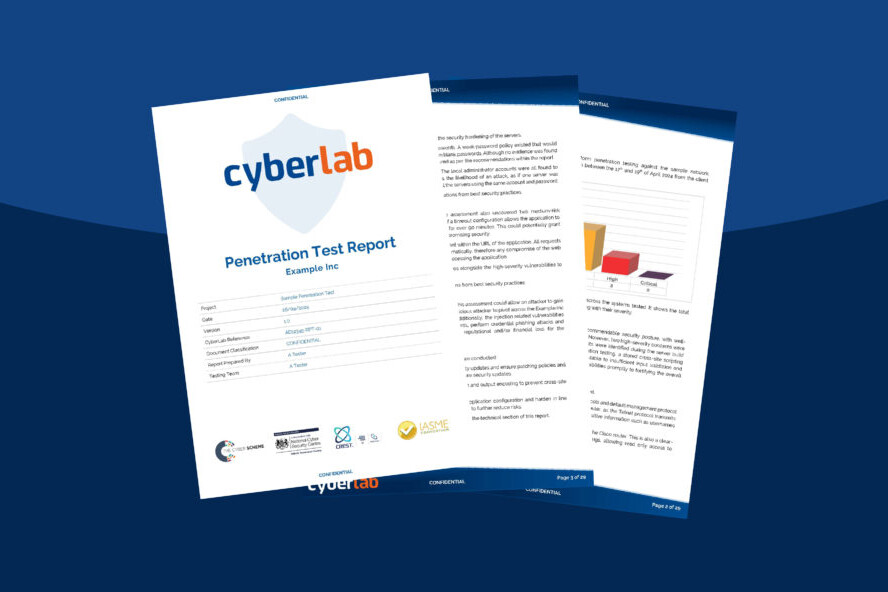
Yes, you will receive a comprehensive report that outlines the findings, categorising vulnerabilities by severity, and providing actionable recommendations to enhance your systems’ security.
CyberLab assesses configurations against CIS Benchmarks Level 1 and 2, DISA STIG (Defense Information Systems Agency Security Technical Implementation Guides) and Microsoft Security Baselines. CIS Benchmarks are globally recognised consensus-based configuration guidelines developed by the Center for Internet Security and are widely accepted as the industry standard for system hardening. Level 1 benchmarks cover essential configuration changes with minimal operational impact, while Level 2 covers more comprehensive hardening measures suited to high-security environments.
A penetration test actively attempts to exploit vulnerabilities in your systems, simulating a real attacker. A build review is a manual inspection of how your systems have been configured, comparing current settings against security benchmarks without attempting active exploitation. The two services are complementary – a build review identifies hardening weaknesses before a pen test, and a pen test validates whether remaining weaknesses after remediation can actually be exploited. Many organisations run both as part of a structured security programme.