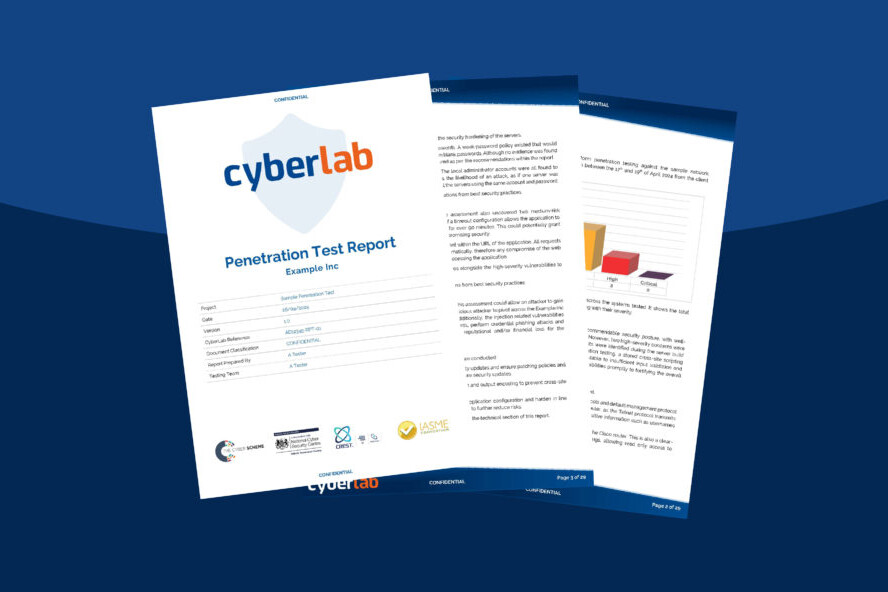

OT environments are increasingly targeted by threat actors because the consequences of disruption are severe and because many systems remain poorly protected. Energy, water, manufacturing, transport and other critical infrastructure operators face growing regulatory pressure to demonstrate OT security, including under the NIS Regulations 2018 and the NCSC Cyber Assessment Framework. A CyberLab OT penetration test gives you a clear, evidence-based understanding of your exposure - and a practical remediation roadmap to address it.

Proactive Vulnerability Detection
Identify security gaps in your Operational Technology before attackers exploit them.

Real-World Threat Simulation
See how your OT systems would hold up against a genuine attack, providing a practical assessment of your readiness for real-world threats.

Strengthened Security Posture
Gain actionable insights to prioritise remediation efforts and enhance the overall resilience of your Operational Technology systems.

Compliance and Assurance
Meet industry standards and regulatory requirements while demonstrating a commitment to protecting sensitive data and critical systems.
Thousands of organisations across the UK trust us, here’s why…

CREST & CHECK Accredited
We are certified for both CREST and CHECK Green Light testing - an achievement not all testing companies can claim.

Clear and Concise Reports
We provide easy-to-understand reports with detailed findings and actionable recommendations.

CREST Infrastructure & App Testing
We are certified in both CREST Infrastructure and Application testing to the highest standards.

Specialised Testing Teams
Developer-trained testers deliver comprehensive app, API, and cloud testing for deeper, more effective results.

Experienced & Senior Consultants
Our team consists of highly experienced, senior consultants and penetration testers with over 15 years of expertise.

We Save You Time and Money
Clients consistently tell us that we deliver higher-quality testing in less time.

Outstanding Communication
We establish dedicated Teams or Slack channels to ensure seamless two-way communication between all.

Forward-Thinking Security
Our team goes beyond identifying vulnerabilities, offering proactive solutions to mitigate future risks.
What OT Environments Do We Test?
Our OT penetration testing covers the full range of industrial environments and device types, including:
Programmable Logic Controllers (PLCs)
Testing focuses on protocol security, firmware vulnerabilities, authentication weaknesses and the ability to write unauthorised data to control registers.
Human-Machine Interfaces (HMIs)
We assess authentication mechanisms, software vulnerabilities, network exposure and the potential for an attacker to use an HMI to issue dangerous commands to connected PLCs or SCADA systems.
SCADA Systems
Testing evaluates data integrity, access controls, communication security and protocol implementation across supervisory layers.
Industrial Control System (ICS) Networks
We assess network segmentation, firewall configurations, communication between OT and IT networks, and the potential for lateral movement from a compromised asset.
Industrial Protocols
Including Modbus, DNP3, EtherNet/IP and others. We evaluate how these protocols are implemented and whether they are susceptible to spoofing, replay or injection attacks.
Distributed Control Systems (DCS)
We examine autonomous controller configurations, inter-controller communication and access controls across the distributed environment.
OT Penetration Testing vs IT Penetration Testing
Standard IT penetration testing and OT penetration testing share the same goal - identifying vulnerabilities before attackers do - but the methodology, tooling, risks and expertise required are entirely different. In an IT environment, active scanning tools and automated testing techniques are standard practice. In an OT environment, the same approach can crash a PLC, interrupt a production line or trigger a safety event. OT testing requires passive reconnaissance first, manual analysis of industrial protocols, device-specific testing methodologies and a consultant who understands the operational context - not just the technical one.
|
CyberLab
OT Penetration Testing |
Standard
IT Penetration Testing |
|
|---|---|---|
| Environment | Industrial control systems, SCADA, PLCs, HMIs, ICS networks, energy grids and manufacturing lines | Corporate networks, web applications, cloud infrastructure and endpoints |
| Risk sensitivity |
⚠ Extremely high Disruption can cause physical damage, safety incidents or critical operational downtime |
✓ Standard Disruption is recoverable — systems can be restored or rolled back |
| Protocols & devices | Modbus, DNP3, EtherNet/IP, proprietary industrial protocols, legacy PLCs and embedded systems | TCP/IP, HTTP/S, TLS and standard network and application protocols |
| Testing approach | Passive-first reconnaissance — no aggressive scanning against live OT assets. Testing on non-production systems wherever possible. Active testing in agreed maintenance windows only | Active scanning, automated exploitation tools and standard methodology applied to live systems |
| Compliance frameworks | IEC 62443, NIS Regulations 2018, NCSC Cyber Assessment Framework (CAF), sector-specific CNI requirements | NCSC, OWASP Top 10, CREST, CHECK, PCI DSS, ISO 27001 |
| Consultants required | OT specialist with direct industrial and ICS/SCADA experience — CREST and CHECK accredited | CREST or CHECK-accredited penetration tester |
CyberLab holds both CREST and CHECK accreditation for OT security testing
How Our OT Penetration Testing Works
Every OT engagement begins with a detailed scoping conversation. We work with your OT/SCADA subject matter experts and security team to understand your environment, define what is in scope, and establish your Primary Security Concerns (PSCs) – the specific questions you need answered. Examples include: can the services an OT device is listening on be reached from the network, and if so, what can be done? What could an attacker achieve if they reached a PLC’s programming port? How exposed are your OT assets to external access following remote working arrangements?
Establishing PSCs before testing begins ensures the engagement is tailored to your specific risk profile rather than following a generic checklist.
Before any active testing begins, our consultants conduct passive reconnaissance to map your OT environment without generating traffic that could affect device operation. This includes identifying assets, understanding network topology, reviewing industrial protocols in use, and identifying potential attack vectors – all without touching live systems.
Where active testing is required, we use methodologies adapted specifically to OT device types. We do not use standard IT scanning tools against OT assets. PLCs, for example, are tested with full awareness of their embedded CPU limitations and the implications of their lack of HMAC authentication. Testing is conducted on non-production systems wherever possible, or in controlled windows agreed with your operations team.
We assess your environment against real-world attack scenarios relevant to your sector – including insider threat, external remote access attacks, malware targeting OT systems, and physical security weaknesses. Our consultants draw on direct experience of OT attacks and incidents to ensure findings reflect genuine risk rather than theoretical exposure.
You receive a clear, jargon-free report detailing all findings, their potential operational and safety impact, severity ratings and specific remediation guidance. We categorise findings across host, network and physical security layers, and our consultants are available to walk your team through the report and support remediation planning.
Why Choose CyberLab for OT Penetration Testing?
Unmatched Expertise
14-strong UK team, including 7 CHECK Team Leaders, 6 CTMs, and SC/NPPV3-cleared consultants.
ProvenTrack Record
Over a decade of high-stakes testing for public sector and regulated industries, building on our ex-Armadillo Sec heritage.
Trusted by 1,200+ Organisations
Including NHS, local authorities, housing,
manufacturing, education, and financial services.
RapidResponse
Next-day testing for compliance deadlines, audits, and urgent stakeholder needs.
No Jargon, NoOrphaned Reports
Just clear, evidence-based security improvement.

Meet The Security Testing Team
TALES FROM THE CYBERLAB
Episode 14 | Life as an Ethical Hacker Explained
with Tom Unsworth, Security Consultant at CyberLab
TALES FROM THE CYBERLAB
Episode 21 | Hacking Critical Infrastructure Explained
with Steve Clarke, Head of Penetration Testing at CyberLab
OT Penetration Testing: Frequently Asked Questions
OT penetration testing is a structured security assessment of the systems that control industrial processes – including PLCs, HMIs, SCADA systems, ICS networks and industrial protocols such as Modbus and DNP3. Unlike standard IT pen testing, OT testing uses passive reconnaissance and specialist methodologies that avoid disrupting live operations. CyberLab’s OT penetration testing is delivered by CREST and CHECK-accredited consultants with direct industrial experience.
OT devices are operationally sensitive in ways that standard IT systems are not. A malformed packet that would be inconsequential on an IT network can crash a PLC or interrupt a production line. Many OT devices run legacy operating systems, lack basic authentication, and cannot be tested with conventional scanning tools. OT penetration testing requires specialist expertise, passive-first methodology, and a deep understanding of industrial protocols and the physical processes they control.
OT penetration testing is relevant to any organisation operating industrial control systems or SCADA environments. This includes manufacturing, energy generation and distribution, water and utilities, oil and gas, transport, food and beverage production, and critical national infrastructure operators. It is also increasingly relevant to organisations subject to the NIS Regulations 2018 or the NCSC Cyber Assessment Framework.
Our OT penetration testing is mapped against IEC 62443 (the international standard for OT security), the NIS Regulations 2018, and the NCSC Cyber Assessment Framework (CAF). We can also align testing to sector-specific requirements on request.
Not when conducted properly. CyberLab uses passive reconnaissance techniques before any active testing, avoids the use of aggressive scanning tools against OT assets, and conducts active testing on non-production systems wherever possible. Where live system testing is unavoidable, we agree testing windows with your operations team in advance to minimise any risk of disruption.
Timescales depend on the size and complexity of your OT environment. Smaller, well-scoped engagements can be delivered in a few days. Larger or more complex environments with multiple sites or system types take longer. We always begin with a scoping conversation to give you an accurate timeline before work begins.
You receive a comprehensive report covering all findings, their potential operational and safety impact, severity ratings and specific remediation guidance across host, network and physical security layers. Our consultants are available to walk your team through the findings and support remediation planning.
CyberLab has delivered OT penetration tests across manufacturing, critical national infrastructure, energy, utilities and public sector environments. Our team includes consultants with direct OT and ICS experience, and our security testing work is supported by case studies including Futaba Manufacturing UK. Speak with our team to discuss your specific sector requirements.
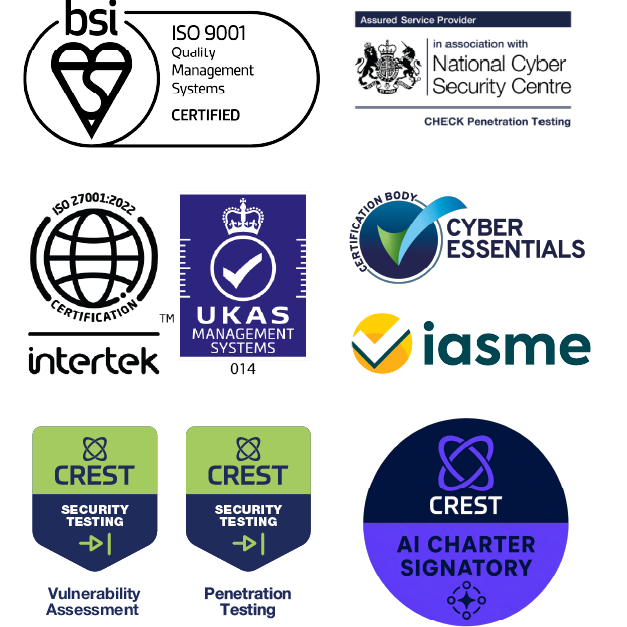
CREST, CHECK & Cyber Scheme Certified

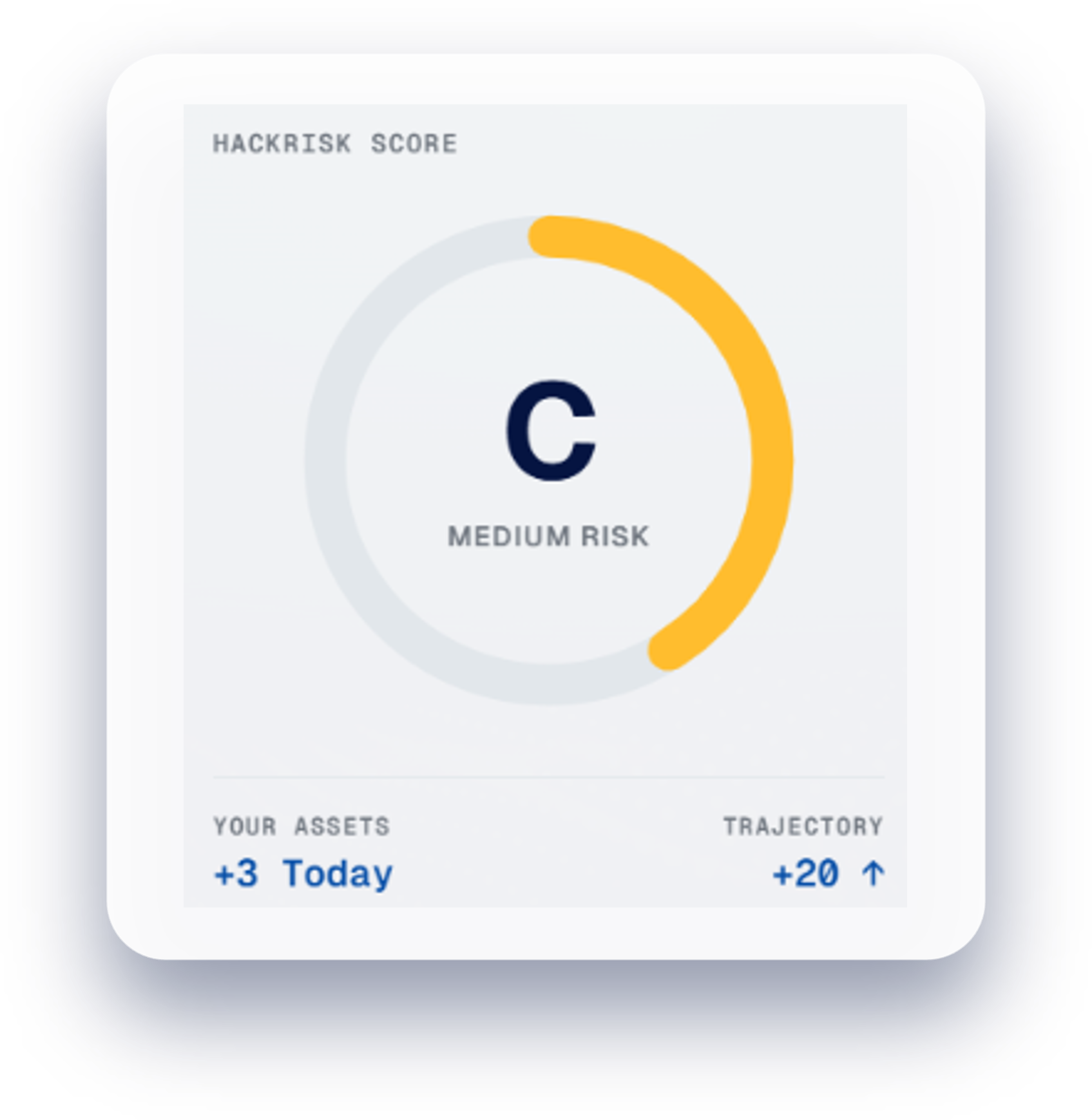
What is your HackRisk score?
We scan your external attack surface and deliver a board-ready report with your risks and remediation advice, free of charge, within 24 hours.