Inspiring career journeys and practical insights from women shaping the future of Cyber Security in this special International Women’s Day episode.
Tales From the CyberLab: Episode 20
Women in Cyber | International Women's Day Special
With Inspiring Women in Cyber Security
Meet the inspiring women shaping the future of Cyber Security and discover the real stories behind their journeys 🙌
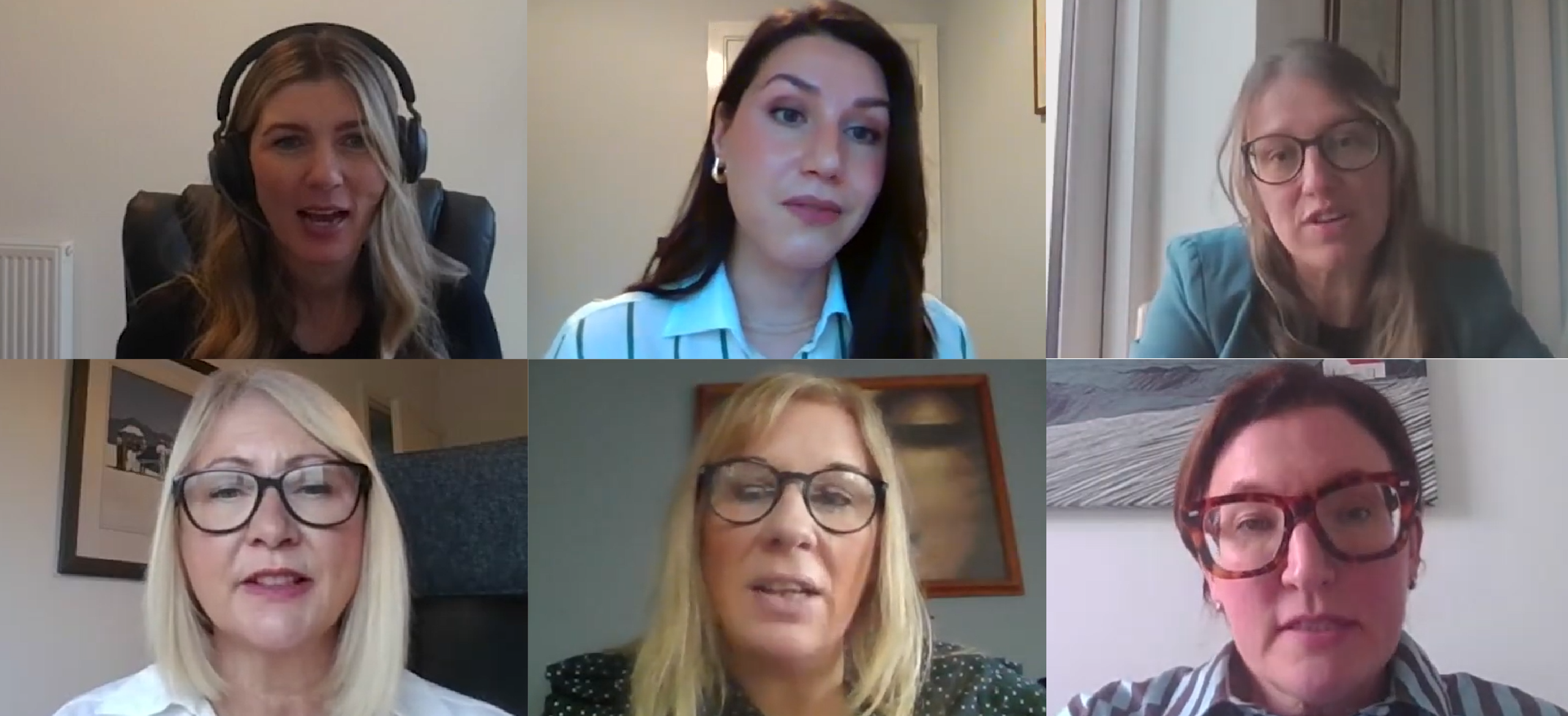
In this special episode of Tales from the CyberLab, Adam Myers brings together an inspiring panel of women from across CyberLab and the wider cyber security community to celebrate International Women’s Day. They share honest, empowering stories about entering the industry, navigating male‑dominated spaces and building confidence in a sector where curiosity and problem solving matter more than ticking every box.
Across the conversation, they explore the realities of career pathways in cyber security, from technical roles to leadership and culture‑focused positions. Their experiences highlight why diverse perspectives strengthen both teams and organisations, and why now is an exciting moment for women considering a future in cyber security. Whether you are early in your career or looking to take the next step, this episode offers practical encouragement and valuable insights.
Listen on Spotify
Episode Transcript
Adam Myers:
Hello and welcome to our podcast Tales from the CyberLab. My name’s Adam Myers and I’m the Sales Director here at CyberLab and I’ll be your host for today. This one-off episode is to highlight International Women’s Day and shine a light on celebrating Women in Tech. Enjoy this episode, it’s going to be great!
Mimi Rostron:
So my name is Mimi. I am the People and Culture Manager at CyberLab. So I’m in a standalone role, so my job is very varied and differs day to day. Overall, I’m responsible for managing the people function within CyberLab. So in practise that means supporting and coaching our managers on all people, processes and policies. I deliver all strategic people and culture initiatives. I oversee recruitment, training and development across the company whilst also ensuring we are compliant against employment law. I also own all culture initiatives, so our Culture Ambassadors and our Women in Tech group. So a very varied role.
Elena Doncheva:
Hi everyone, I’m Elena Doncheva, I’m the Marketing Director here at CyberLab. I lead the marketing strategy, I’m responsible for our market positioning and our brand. I work very closely with Adam as part of the operational board to acquire new customers and I work very closely with our Product, Technical and Sales teams to translate the complex cyber security landscape into a language that our customers can understand and relate to. I also oversee together with my team the production of this podcast and it’s an absolute pleasure to finally be in front of the camera for a difference.
Cheryl Duck:
So I’m Cheryl Duck. I’m the Senior Finance Manager here at CyberLab. So my role: I oversee the end-to-end post-sales process for all our customers. That includes everything from the ordering coming in, us ordering those services, billing the customer and collecting the cash at the end. Alongside that, the team handles the processing payment of all our supplier invoices and just to top it off, I also manage the payroll for the company, making sure everyone’s paid accurately and on time.
Carla Thrower:
Yeah, so my name’s Carla. I have quite a hybrid role here at CyberLab, so I’m the Assistant Cyber Sales Leader. So I support with the account managers on the day-to-day basis, all of their admin of their roles and just really helping them out. I also have my own account base as well, so I have my own accounts that I look after and I’m also taking care of the vendors as well at CyberLab.
Fiona Kinsler:
My name is Fiona Kinsler. I’m a Cybersecurity Sales Consultant and my role within the business is working in the services division and I consult with customers to proactively help them defend against bad actors, help them with compliance and also give them a good understanding of real world risks with regards to cyber security.
Jude McCorry:
So I’m Jude McCorry and I’m the CEO of the Cyber and Fraud Centre. We are social enterprise and we’re based in Scotland.
Mimi Rostron:
So this is actually my first role in the cyber security industry. It wasn’t something I was overly familiar with or had much experience with, however, I did know it was a growing industry. So when the opportunity arose, it felt like a really exciting step for me to be able to join a growing company in a growing industry.
Elena Doncheva:
I knew I wanted to work in tech ever since I finished my business degree, my master’s degree, and I was recruited very quickly by our sister company Chess. There, I was overseeing the whole group marketing function and I was exposed to different types of technology from telecommunications to massive digital transformation projects with some of our enterprise level customers as well as cyber security. I quickly realised I find cyber security as probably the most interesting topic of everything we were covering. When I was brought into CyberLab to support with the de-merger and lead with the brand and the marketing function set up, I took the opportunity and it’s been quite a journey ever since. Since I was offered the role to join the board, it’s been a fantastic opportunity to learn more about the industry and it’s definitely been a journey in terms of how quickly the industry changes and it’s definitely for people who enjoy fast-paced environments.
Cheryl Duck:
So I worked for Chess, which is CyberLab’s sister company, for 15 years. When CyberLab was born back in 2023, I was given the opportunity to move across and I was genuinely really excited about this, given it’s such a fast growing industry. Now, instead of purely focusing on AP, I get to work across the different departments looking at how our processes can connect and how we can make them more efficient. This means we’re able to support our customers even better and I’ve loved being a part of that.
Carla Thrower:
So back in the day when I was leaving school, we used to have a thing where we would have a careers morning and you would all sit around a computer and you would put in your sex and what interests you and it would come up with a list of boy jobs and girl jobs – and for females, it would always be secretary, hairdressers, nurses – and I remember asking my teacher if I could go into IT. It was changing, it was 1996 computers were coming out and I got told, unfortunately, you are a girl, so that probably won’t be a possibility. And I lived a very in a farming sort of family. So I was expected to have a female job and I remember my mom telling me when I left school that she wanted me to be a hairdresser or a secretary and that we were all kind of pushed along the lines to get a career and a trade and the trades you could fall back on. So I started my career as a legal secretary and got very big and I decided back in 1996, mobile phones came out and I decided to go and buy my first mobile phone and I think I was in the phone shop for about 10 minutes and got offered a job and it went from mobile phones to IT sales and then into cyber security.
Fiona Kinsler:
I’ve worked in technology for 38 years now, quite a long time, but as the threat landscape has changed over the years, it was a natural progression for me going from selling print solutions for many years (25 years) and then selling IT for an IT company: applications, Microsoft. I was very aware that the landscape was shifting and that obviously year-on-year it’s increased the amount of cyber attacks that are happening and obviously that has its own challenges. So it was something that clients were talking about, you know, cyber attacks were happening, we were reading about them and it was something that I was really interested in and eight years ago, that’s when I shifted into cyber security. So it’s been great.
Jude McCorry:
So when I worked in my previous role, which was at the Data Lab in Edinburgh, I really wanted to look at how do I get into a CEO role. I had this thing in my mind, it’s about seven years ago, and the job came up at the Cyber and Fraud Centre, which was then called the Scottish Business Resilience Centre. So that was halfway through the year. Then I applied for it, and then I started in March. So coming up to six years ago, and it was the week of lockdown that I took on the role and basically there weren’t that many CEO positions for maybe first time CEOs in Scotland. So that’s why I went for this role.
Mimi Rostron:
I think it’s really important to note that first of all, cyber security is a heavily male-dominated industry. I think that is something that can put women off from applying for those kinds of roles, but I actually don’t think that’s something to be afraid of. I do think it’s an opportunity, but as women, we often underestimate our capability, especially within technical roles. So there is a stat out there that says that men apply for a job when they meet 60% of the qualifications, whereas women will apply only if they meet a hundred percent of them – I’m not sure how true the actual statement is, but there’s definitely truth in that statement. So I would just say: don’t be afraid to apply for those roles. Cyber security is one of those industries where nobody knows absolutely everything. It’s an industry that is still learning. So being curious, having good problem solving skills and a willingness to learn are actually huge strengths. Of course, within the technical roles, you do need to have the qualifications and the right skills, but you don’t necessarily need to tick every box. So I think having a willingness to learn and being able to showcase that is really important. So one thing I’d say is back yourself and apply for those roles. Even if you don’t tick every box, you might just be surprised. I also think it’s incredibly important to have a support network around you. So go to those Women in Tech groups, meet women who are already in the industry and learn from them. Find mentors and people who will champion you and understand your challenges. As I said, it is a male dominated industry, so meeting women who understand the challenges you might face can really help. So don’t be afraid to put yourself out there and ask questions and learn from people already in the industry. Having that support can make such a difference.
Elena Doncheva:
I’m going to repeat what Mimi is saying, that we essentially as women treat job descriptions as tick boxes, and my advice would be to definitely lean in and apply for the roles that perhaps you do not feel a 100% qualified for. When I joined CyberLab, I made sure that we established the programmes, we established the initiatives to provide the different level of support people require depending on their background, depending on their gender, and I’ve been very lucky to work with a leadership team that are genuine allies and understand the difference and the level of support we can provide. We’re about equity rather than equality, so people can definitely vary in terms of the type of support, the type of confidence that we need to build, and as women, we tend to score higher on the softer skills and we not realise how important these are. Skills like leadership, interpersonal skills, these are fantastic and definitely something our industry needs more of. We recently did a talk with the Women in Tech North and we have discussed the various career trajectories and the journeys you can undertake even without technical background. Yes, there’s the engineering type of roles, there’s the technical roles, but there is also plenty of management and business roles that are within the industry and are still very much required.
Cheryl Duck:
I’d say don’t be put off by the idea that cyber security is a male-dominated industry. You’re not limited to just technical roles either. In my experience, men and women are treated equally and everybody’s given the chance to learn, grow, and really find their place. So you all absolutely belong here. I genuinely love what I do and I love where I work and bringing in my transferable skills from my previous roles, I’ve been able to build my confidence and deepen my knowledge thanks to the support of all the men and women across CyberLab.
Carla Thrower:
I think to just go for it, it’s completely changed from years ago. No longer are we questioned if we want to have babies or if it’s really a career for us. Companies are really moving forward to get females into the workplace. There’s lots of potential to move up the ranks. There’s lots to learn and every female is on exactly the same level as a male now. So there’s absolutely every opportunity to move forward.
Fiona Kinsler:
I would say that if you have an interest in cyber security, for younger women who are coming through school, and that’s where it would generally start I would imagine – if you’re interested in computing, interested in IT, technology, gaming, all that type of thing, and then you’re moving into high school and you start to take computer science or whatever, go to university, it’s a great path then to come into cyber security. And also I think for people that are already in working, if you might be 30 years old, 40 years old, you might work in IT and generally you want to move up. There is opportunities now to do that. You could be a bit older and there’s maybe a leadership development course within your operation. It’s great to move then into a CISO position or Information Security Officer position, there are opportunities – and I think the reason more and more so that there are opportunities is because yes, there is a gender imbalance and I think that businesses are very much aware of that and they’re motivated to looking for good people who want to move into these positions, who are willing to train them. They have business managers who are getting trained as well. I think within many organisations, having to look at things like what ours does to women need to work because of childcare etc, workshops, that type of thing. So yeah, there’s lots of opportunity there, but it’s a great industry to work in. I mean, unfortunately cyber attacks are happening and which are absolutely detrimental to a lot of businesses – we’ve seen that in the news recently, but when you’re working in the industry, it can give you a lot back as well because you are actually helping people as well. So it really is an exciting, it’s an interesting industry and unfortunately it is getting busier out there as well. So yeah, I would say to anybody, any female out there that’s looking to move into cyber security, just go for it.
Jude McCorry:
Go for it. I think a lot of women probably are put off by cyber security because they think it’s maybe highly technical or that maybe it’s about maths. I suppose maybe younger women, younger girls in school probably think and the same with IT jobs as well. They probably think it’s very math-oriented, but there’s plenty of different roles out there, like around testing, around training and incident response, SOC analysts, loads of different things that people should look at for their career and it’s not about maths.
Adam Myers:
So that concludes this episode of Tales from the CyberLab. Thank you to all the amazing women who shared their success stories and until next time, Stay Secure.